
Explore whether human + alien hybrids are scientifically possible. Learn about DNA compatibility, genetic engineering, future possibilities, and real science behind the idea.
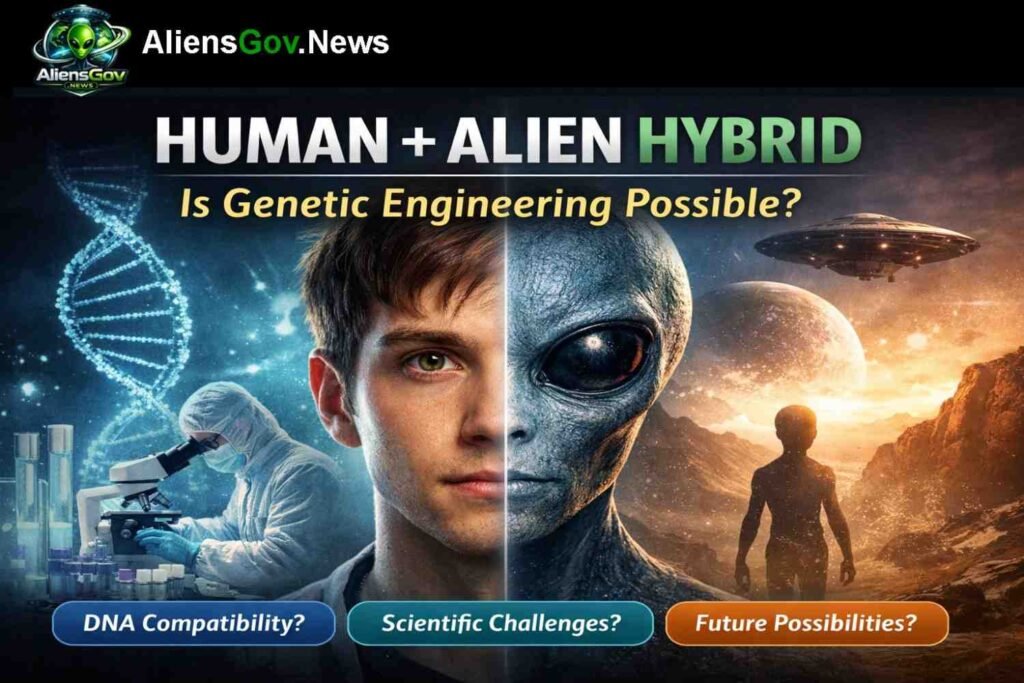
Human + Alien Hybrid — Future Science or Pure Fiction?
Introduction
What if one day scientists announce: “We’ve created a human + alien hybrid”?
It sounds like something straight out of a sci-fi movie—but the question is becoming more serious as genetic engineering evolves.
We’ve already edited human genes, cloned animals, and even created synthetic life in labs. So naturally, curiosity grows: could we go beyond Earth and combine human DNA with alien biology?
Here’s the reality—science is powerful, but it has limits.
In this guide, you’ll discover:
- Whether human + alien hybrid creation is scientifically possible
- What genetic engineering can (and cannot) do
- And what such a hybrid might actually look like—based on real biology
No fantasy. Just logic, science, and a bit of curiosity.
Understanding Genetic Engineering (Simple Explanation)
What Is Genetic Engineering?
Genetic engineering is the process of changing an organism’s DNA to add, remove, or modify traits.
One of the most powerful tools used today is:
- CRISPR gene editing
With it, scientists can:
- Fix genetic diseases
- Improve crops
- Modify organisms at the molecular level
👉 Real-life example:
Bacteria are engineered with human genes to produce insulin for diabetes patients.
How Far Has Science Reached?
Let’s be honest—science is advanced, but not unlimited.
Today, scientists can:
- Combine genes from similar species
- Create lab-grown tissues
- Clone animals (like Dolly the sheep)
But they cannot:
- Combine completely unknown life forms
- Create stable hybrids from unrelated species
The Core Problem — DNA Compatibility
Why Compatibility Matters
For hybrid creation, DNA must be compatible.
Even on Earth:
- Human + chimpanzee → ❌ Not possible
- Human + any animal → ❌ Not possible
- Horse + donkey → ✔️ Possible (creates mule)
👉 Why?
Because their genetic structures are similar.
Now Imagine Aliens
Aliens, if they exist, could be:
- Based on different chemistry
- Using a different genetic system (not DNA)
- Living in extreme environments
👉 That means:
Their biology might be completely unreadable to human cells.
Future Possibility — Could It Ever Happen?
Scenario 1 — If Alien DNA Is Similar
If scientists discover alien life with:
- DNA-like structure
- Similar genetic coding system
Then theoretically:
- Small gene transfers might be possible
- Scientists could test compatibility
👉 Still extremely difficult—but not impossible in theory.
Scenario 2 — Synthetic Hybrid Creation
More realistic future approach:
Instead of direct mixing:
- Scientists may recreate alien genes artificially
- Then insert selected traits into human DNA
👉 This would create:
A lab-engineered hybrid—not natural reproduction
Important Truth
Even in the future:
- It won’t be “human + alien baby”
- It will be controlled genetic design in labs
What Would a Human + Alien Hybrid Look Like? (Science-Based)
Let’s remove fantasy and think logically.
Mostly Human Appearance
The hybrid would likely:
- Look mostly human
- Have subtle biological enhancements
Why?
👉 Too many changes = unstable organism
Disclaimer:: Some visuals in this section are AI-generated to help explain complex ideas like human-alien hybrid features. These are conceptual illustrations, not real-life images.
Possible Features (Based on Biology)
Eyes

- Larger pupils for low-light environments
- Ability to detect infrared or UV light
Brain Function

- Faster information processing
- Improved memory
- Possibly higher adaptability
Internal Organs
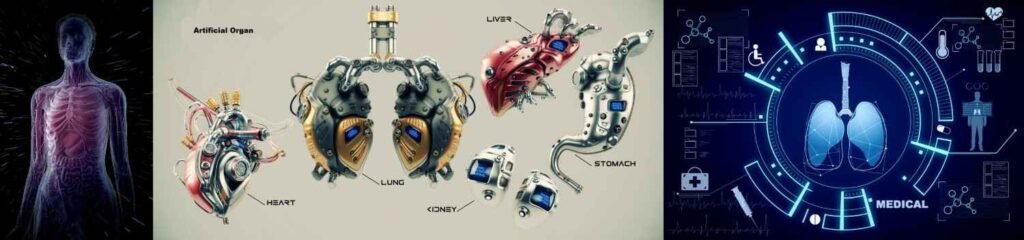
- More efficient lungs (less oxygen needed)
- Strong immune system
- Resistance to diseases or radiation
Skin & Body Structure

- Skin resistant to heat, cold, or radiation
- Strong yet lightweight bones
- Slightly different body proportions
Major Scientific Challenges
1. Unknown Alien Biology
We don’t even know:
- If aliens exist
- What they are made of
2. Genetic Translation Barrier
Alien genes may:
- Not function in human cells
- Cause harmful mutations
3. Ethical Concerns
This is huge.
Questions include:
- Should we create hybrid life?
- What rights would it have?
- Is it safe?
H3: 4. High Risk of Failure
Even today:
- Small gene edits can fail
- Mutations can cause serious issues
👉 Hybrid creation would be far more complex
Opinion + Logic + Doubt
👉 Opinion:
The idea of human + alien hybrid is exciting and futuristic.
👉 Logic:
Science clearly shows it’s nearly impossible without shared biology.
👉 Doubt:
What if alien life is more similar to us than we think?
That small “what if” keeps this topic alive.
Conclusion
Right now, human + alien hybrid creation is not possible.
In the future, it might become theoretically possible only if:
- We discover compatible alien life
- We fully understand their genetics
- Technology advances far beyond today
Even then, the result would likely:
- Be lab-created
- Look mostly human
- Have only limited enhancements
👉 Final truth:
This idea sits between science and imagination—not reality (yet).
FAQ (Frequently Asked Questions)
1. Can humans breed with aliens naturally?
No, that’s not possible. We don’t even know how alien biology works, so natural reproduction isn’t realistic.
2. Has any human-alien hybrid been created?
No, there’s no verified scientific evidence of this. Most claims you see are just speculation or fiction.
3. Can genetic engineering make hybrids?
Only when species are biologically compatible. With unknown alien life, that’s not something science can do right now.
4. What is CRISPR?
CRISPR is a powerful tool that lets scientists edit DNA with high precision. It’s widely used in modern genetic research.
5. Could aliens have DNA like humans?
It’s possible, but we have no proof yet. Alien life could be completely different from anything we know.
6. Would a hybrid look scary?
Probably not. If it were ever possible, it would most likely look mostly human with small differences.
7. Can aliens reproduce with humans?
There’s no scientific evidence of that happening. Right now, it’s just an idea, not reality.
8. Could hybrids be more intelligent?
In theory, maybe—but there’s no real evidence today. It’s more of a speculative concept than a proven fact.
9. Is this topic real science or fiction?
It’s a mix of both. Some parts are based on science, but most ideas come from imagination and fiction.
10. What is the biggest challenge?
The biggest problem is DNA compatibility. We also don’t understand alien biology at all.
11. Could hybrids survive on Earth?
It’s uncertain. Survival would completely depend on how their biology works.
12. Are scientists working on this secretly?
As of now, there is no credible proof that scientists are secretly creating human-alien hybrids. These claims are mostly based on speculation and conspiracy theories. However, if alien life is discovered in the future, scientific research could explore new possibilities—though this remains highly theoretical.
13. Could AI help in hybrid creation?
AI can definitely help scientists understand genetics better. It can analyze huge amounts of data and even predict how genes might behave. But on its own, AI can’t create life—it’s just a tool that supports human research.
14. Would hybrids have human rights?
This is a complicated question. If a hybrid can think, feel, and understand like humans, many people would argue it deserves basic rights. But there’s no clear answer yet—it would likely depend on future laws and ethics
15. Is this possible in the next 100 years?
Honestly, it seems very unlikely. We would first need to discover alien life and understand how it works. Until then, creating a human-alien hybrid remains more of a theoretical idea than a real possibility.
Disclaimer: This article includes AI-generated images created for educational and illustrative purposes. These visuals represent theoretical concepts such as genetic engineering and human-alien hybrid possibilities. They are not real, verified, or based on actual scientific discoveries. The content is based on current scientific understanding and publicly available information.